
In the last post we explored voice modulation and learned that AM and FM are the two primary modes. We also noted that single sideband (SSB), a variant of AM, is the dominant form of voice communication on the ham bands below 50 MHz. This post will delve into the details of SSB.

SSB is important because it significantly improves the plain AM signal in both efficiency and bandwidth.
 In context of voice modulation, bandwidth means the range of frequencies the signal occupies. In general, wider bandwidth means higher audio quality but less efficiency, and vice versa.



The SSB signal is generated using AM but before it is transmitted the carrier and one sideband are removed. A diagram of an AM signal helps visualize how it starts:
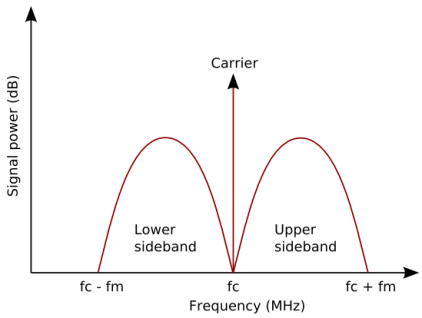
SSB transmission reduces the power required (more efficient) and occupies a smaller slice of the RF spectrum (narrower bandwidth, ~3kHz), when compared to AM.

The transmitter circuitry is essentially AM but adds carrier and sideband filters at nominal cost. The SSB receiver is more complex and expensive than AM because it must reconstruct the missing (mirror image) sideband to create a full voice signal, as well as replace the carrier with a local signal.
Because it has to recover the opposite sideband the SSB receiver is somewhat sensitive to tuning to make the voice sound normal or natural. You will find that voices sound quite different in clarity and pitch when tuning around the transmit frequency. A common reaction to hearing off-tune SSB is that it sounds like a quacking duck. A great video demonstrating some of the nuances of SSB sound and tuning can be found in the links at the bottom.

So SSB transmits only one sideband, but which one, you ask? The answer is either. When the upper sideband is transmitted and received, the operation is called upper sideband (USB).
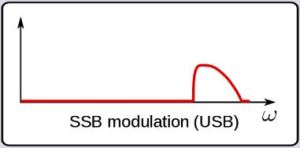

Conversely, when the lower sideband is used, the operation is called lower sideband (LSB).
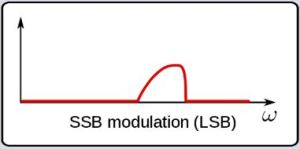
 In ham radio either one is legal to use in the phone portion of the band plan but by convention LSB is used below 10MHz, and USB is used above 10MHz (note that Continue reading










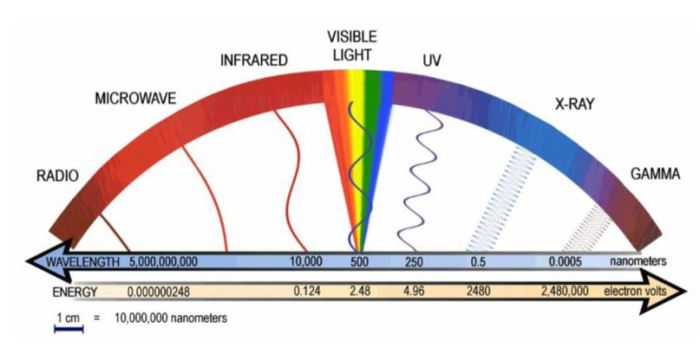


 Now just because RF radiation is non-ionizing doesn’t mean it is completely safe. Besides the direct contact hazard, exposure to radio frequency energy may cause localized tissue heating, particularly in the eyes and male reproductive area (here’s where a lady ham has an advantage, hihi). Non-thermal effects of RF radiation are being studied constantly because, while compelling, they are somewhat ambiguous and unproven.




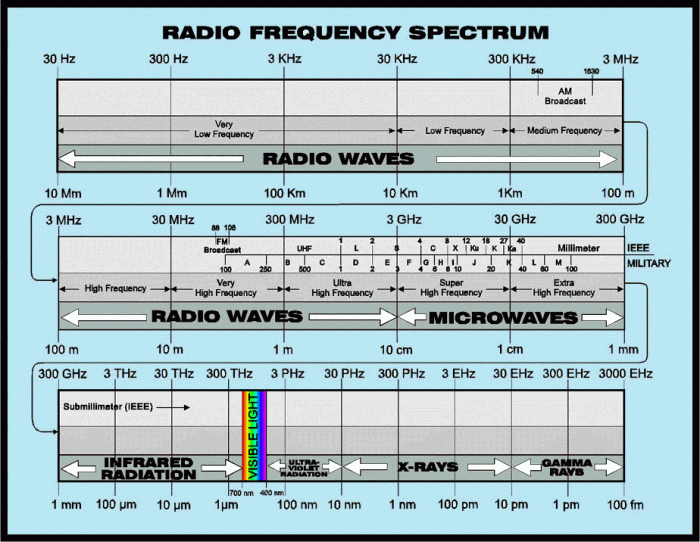
 This vibration frequency is normally measured in cycles per second and its units are Hertz.
  Rates of oscillation in radio work are thousands and millions of Hertz (Hz). With standardized



 NewHams.info