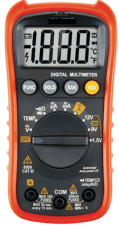
 Every ham should have a multimeter and know how to use it. Multimeter use is a practical skill not only for ham radio but also around the house for general power and wiring work. As with many topics on this site, details of the subject are too extensive to cover in a simple post so we will give you just basic info along with some resources for further study on your own. Even with minimal detail this is still a long, involved post.
By definition multimeters measure more than one thing. In electrical work a multimeter typically measures voltage, current, and resistance. Sometimes it is called a volt-ohm-milliammeter or simply a volt ohm meter (VOM). Note that these are the three fundamental electrical parameters as described by Ohm’s law.



In addition to measuring the three core electrical parameters, multimeters may also read other things such as temperature, frequency, capacitance, plus provide quick checks of diodes and continuity. At minimum they will measure voltage and resistance, since these are the two most commonly read values.

To measure voltage you connect the meter leads between (across) two points. This parallel connection allows real-time undisturbed readings in live circuits or power sources.

Note that resistance measurements are also made with test lead parallel connections but never on live circuits; more on that below.
Measuring current with a common multimeter is more disruptive because it requires the circuit to be broken somewhere and have the meter leads inserted in-line to read amperage, and that is not often very convenient.

This series connection requirement for measuring current is the main reason it is less commonly used, and why clamp-on (non-contact) current meters are sometimes favored at the expense of accuracy and greater cost.
So what would the ham or handy homeowner need a multimeter for? The possibilities are endless but common scenarios are testing batteries, locating blown fuses, verifying DC and AC power supply voltages, and checking cables for undesired opens or shorts. For kit or DIY circuit builds it is also useful to verify resistor values and test active circuit voltages. Here is a link to a list of Ten uses for a multimeter from Ham Radio School.
There are a few safety considerations to note when using a multimeter. Two involve the test leads which connect the meter terminals to the circuit being measured. First, the leads (probes, wires, and connectors) should be rated for at least the voltage being measured. The meter itself must also be rated to exceed this voltage.

Good meter leads will have shrouded plugs, high quality flexible insulation, and finger guards (flanges) at the probe tips:
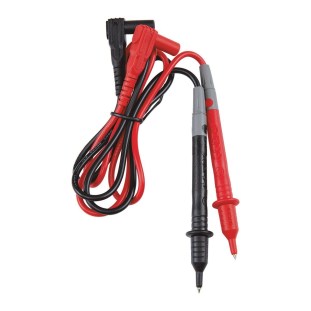 They will also be rated at least 600V as marked on the probe for general measurement below that voltage. Special Continue reading


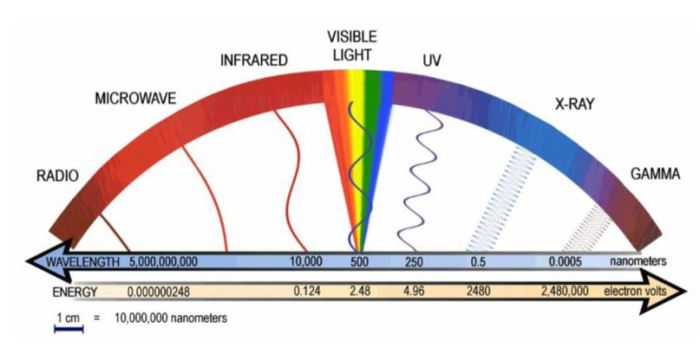


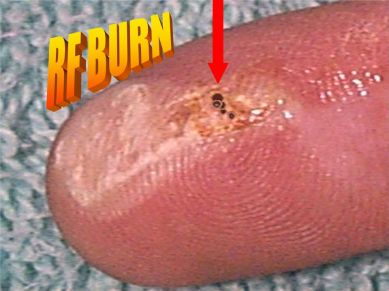
 Now just because RF radiation is non-ionizing doesn’t mean it is completely safe. Besides the direct contact hazard, exposure to radio frequency energy may cause localized tissue heating, particularly in the eyes and male reproductive area (here’s where a lady ham has an advantage, hihi). Non-thermal effects of RF radiation are being studied constantly because, while compelling, they are somewhat ambiguous and unproven.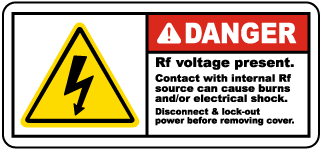







 NewHams.info